


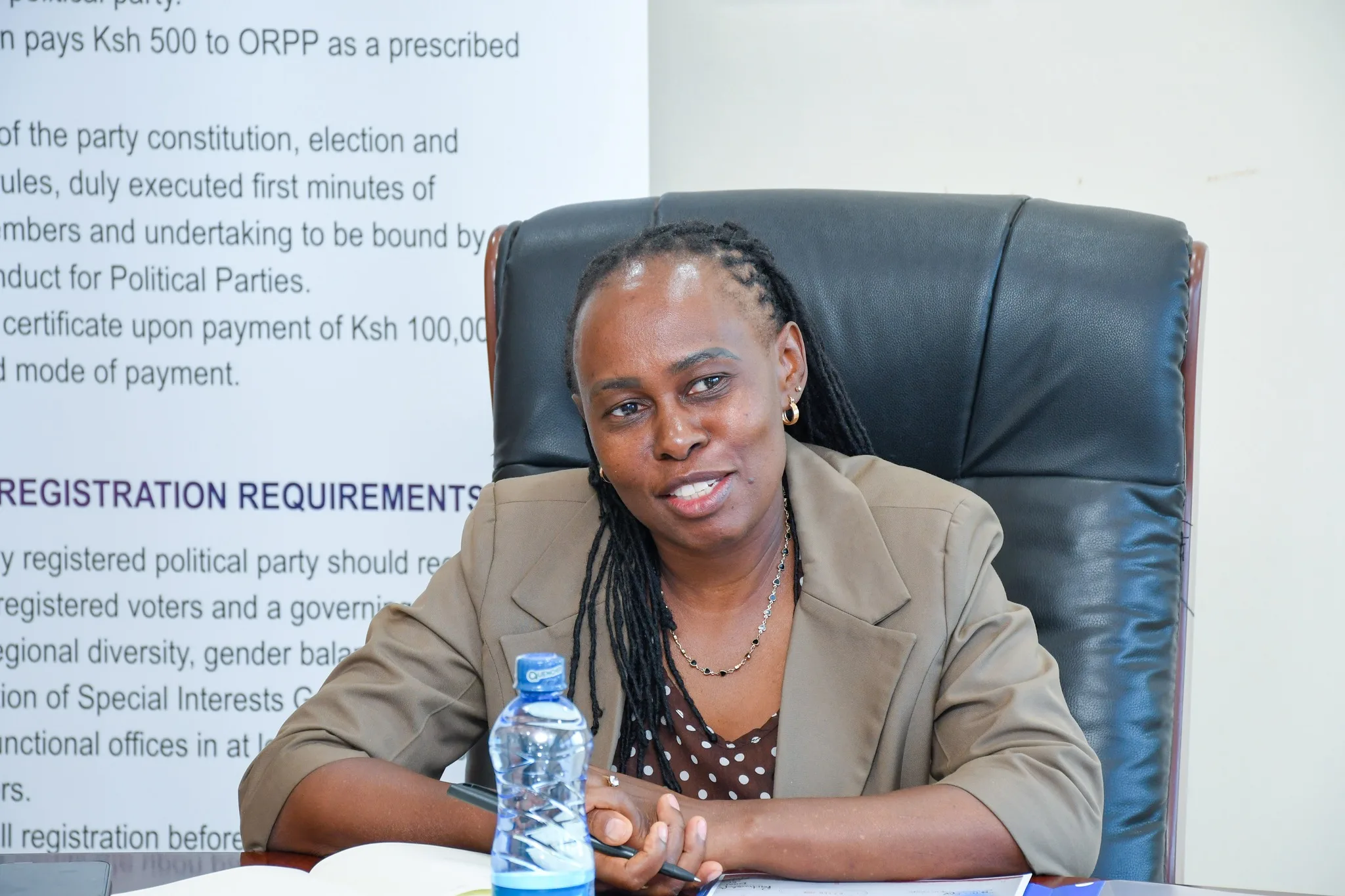
By Assistant Registrar, CPA, CS Agatha Wahome
 Have You Ever Imagined Life Without the Internet?
One day, a man from Generation Y (the Millennials) asked me how we survived university life without mobile phones. He simply could not imagine how we interacted, studied, managed our leisure, and how we generally navigated life without the internet. None of the communication techniques we relied on back then could ring a bell in his mind.
In today’s world, many, especially the young, cannot imagine life without the internet. How would one communicate, get directions, book accommodation, order a taxi, bank, shop, keep up with current affairs, or conduct official business?
In January 2026, the people of the Republic of Uganda exercised their democratic right by voting in a general election held across all districts of the country. Two days before the voting, the Uganda Authorities suspended internet services, plunging the country into a nationwide internet blackout. The internet gained global attention.
As an election observer in a foreign country, we had a full pinch of the internet disconnect. I had a hunch this might happen. When I was posted 356 kilometers away from the city, I thought I was adequately prepared. I had searched for and downloaded details of my working documents and attendant necessities, including potential accommodation facilities in the host city. However, this proved insufficient once the internet was shut down while we were en route, rendering online maps unusable. My team decided to follow the Mission’s advice to stick together for coordination and security. Without the internet, this advice became not just wise but essential.
Upon arrival, we had to depend on strangers for directions. We had to knock on hotels in search of vacant rooms in excess of five times before finally finding a place to stay. In the process, we lost count and track of hotel previous ones we had visited.
To the core of our mission, locating stakeholders we needed in the course of our work was equally a toll order. Verbal directions and phone calls once again came in handy as we tried to locate the offices of key stakeholders. Critical information could not be provided to our team by the Electoral Commission because it required downloading, printing, or online sharing, all impossible without internet access. Once again, we found ourselves asking for directions from one polling station to another.
Despite the hurdles, we still managed to undertake the exercise. On the conclusion of the election process, we had to return to the city. Information about the security situation was scarce and unreliable. What little we heard was largely negative, suggesting conditions might worsen the next day. With limited knowledge of what lay ahead, we decided to begin the journey back to the capital.
Back in the capital, even locating our previous accommodation and taxi providers became difficult due to unreliable communication channels. When calls failed, we resorted to sending messengers, conducting door-to-door searches, using boda-bodas, and walking.
In the end, the mission was completed. We adapted, improvised, and carried on.
Generations X and Y grew up without mobile phones, the internet, or television in the early years of their lives. For many, even radio, the most common means of communication then, was a luxury. Yet, life went on normally.
There are myriad life and electoral lessons (a subject we should stay on as ORPP and other electoral-bound players) to draw from the Uganda scenario.
Overall, adaptation is survival. Save important contacts. Prepare for uncertainty. Learn new skills. Situations that may disrupt our way of life will always arise; life must go on. To rise above the tides that confront us, Bottom of Formlet’s as individuals and collectively as an Office, mitigate, adapt, and move forward.